เซลฟ์คิท Self Kit
หมวดหมู่ : คลังปัญญา : Smart Knowledge
Tags:
อ่านแล้ว: 1 ครั้ง

เซลฟ์คิท Self Kit
 Know Yourself Better รู้จักตัวเองดีแบบฝึกหัดสะท้อนตน แบบฝึกหัดสะท้อนตนเอง ไกด์ไลน์ Worksheet Growth Mindset Card Game
 30 - 45 นาที
  ทุกเมื่อที่ต้องการ
  1 คน
1 คน  ทุกวัย
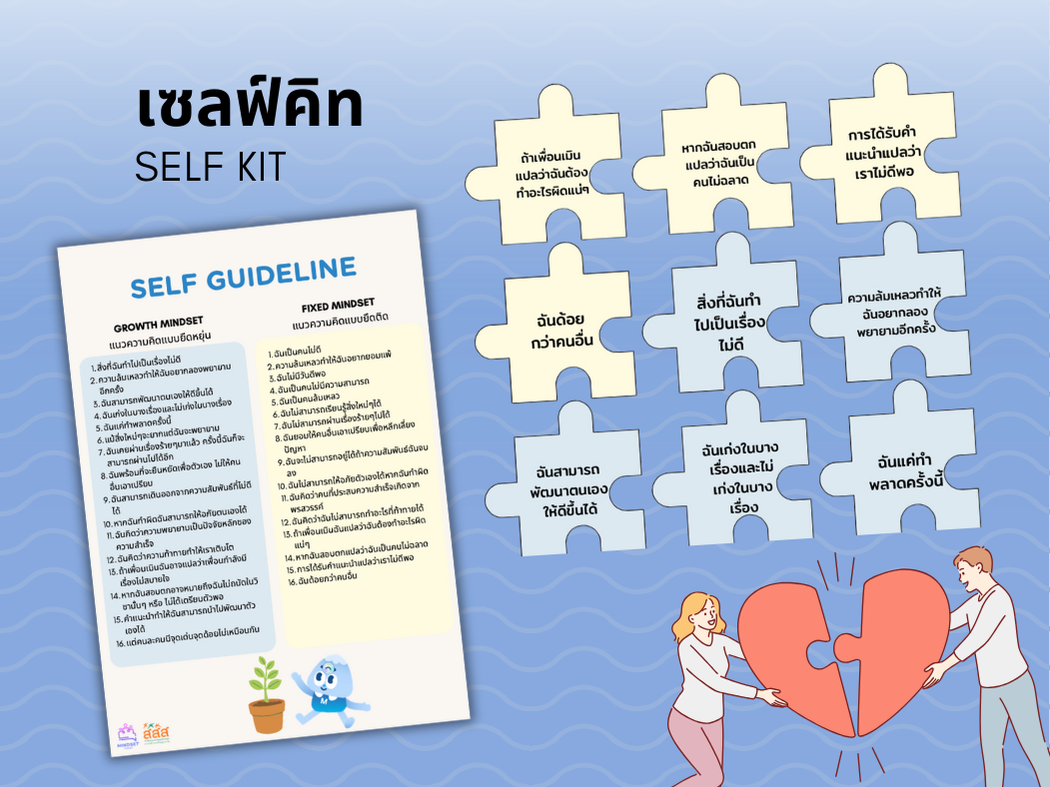 คำอธิบายเครื่องมือ Self Kit จะช่วยให้เราได้สำรวจวิถีความคิดของตัวเองว่าเรามีแนวความคิดแบบใด และเราจะเปลี่ยนแปลงแนวความคิดแบบยึดติดป็นแนวความคิดแบบยืดหยุ่นได้อย่างไร เพื่อให้มีสุขภาพจิตที่ดีขึ้นและเพื่อให้สามารถพัฒนาตัวเองได้เรื่อยๆวิธีการใช้งาน1. อ่าน Self Guideline เกี่ยวกับ แนวความคิดแบบยืดหยุ่น (Growth Mindset) กับ แนวความคิดแบบยึดติด (Fixed Mindset) อย่างละเอียด และ ลองคิดตามคร่าวๆว่าตัวเองมีแนวคิดแบบไหนเป็นส่วนใหญ่2. ทบทวนและลองเขียนอธิบายว่า “เราอยากเป็นคนที่ดีขึ้นในด้านไหน” และ “เพราะอะไร”3. เลือกประโยคแนวความคิดที่ตรงกับตัวเองที่สุดมา 9 ประโยค และ เขียนลงในช่อง4. สำรวจว่าประโยคทั้ง 9 ประโยคที่เราเลือกมา เป็นแนวความคิดแบบใดบ้าง (สามารถอิงจากคู่มือ Self Guideline) และ เขียนลงในช่อง5. เลือกแนวความคิดแบบยืดหยุ่น (Growth Mindset) และ แนวความคิดแบบยึดติด (Fixed Mindset)ที่เรารู้สึกว่าส่งผลต่อตัวเรามากที่สุดอย่างละ 1 ประโยค และ นํามาเขียนลงบนจิ๊กซอว์ในแบบฟอร์ม6. คิดวิเคราะห์และตอบคําถามข้อที่ 5 ในแบบฟอร์ม7. เขียนให้กําลังใจตัวเองโดยใช้ Growth Mindset
Know Yourself Better รู้จักตัวเองดีแบบฝึกหัดสะท้อนตน แบบฝึกหัดสะท้อนตนเอง ไกด์ไลน์ Worksheet Growth Mindset Card Game
30 - 45 นาทีทุกเมื่อที่ต้องการ1 คนทุกวัย

คำอธิบาย
เครื่องมือ Self Kit จะช่วยให้เราได้สำรวจวิถีความคิดของตัวเองว่าเรามีแนวความคิดแบบใด และเราจะเปลี่ยนแปลงแนวความคิดแบบยึดติดป็นแนวความคิดแบบยืดหยุ่นได้อย่างไร เพื่อให้มีสุขภาพจิตที่ดีขึ้นและเพื่อให้สามารถพัฒนาตัวเองได้เรื่อยๆ
วิธีการใช้งาน
1. อ่าน Self Guideline เกี่ยวกับ แนวความคิดแบบยืดหยุ่น (Growth Mindset) กับ แนวความคิดแบบยึดติด (Fixed Mindset) อย่างละเอียด และ ลองคิดตามคร่าวๆว่าตัวเองมีแนวคิดแบบไหนเป็นส่วนใหญ่
2. ทบทวนและลองเขียนอธิบายว่า “เราอยากเป็นคนที่ดีขึ้นในด้านไหน” และ “เพราะอะไร”
3. เลือกประโยคแนวความคิดที่ตรงกับตัวเองที่สุดมา 9 ประโยค และ เขียนลงในช่อง
4. สำรวจว่าประโยคทั้ง 9 ประโยคที่เราเลือกมา เป็นแนวความคิดแบบใดบ้าง (สามารถอิงจากคู่มือ Self Guideline) และ เขียนลงในช่อง
5. เลือกแนวความคิดแบบยืดหยุ่น (Growth Mindset) และ แนวความคิดแบบยึดติด (Fixed Mindset)ที่เรารู้สึกว่าส่งผลต่อตัวเรามากที่สุดอย่างละ 1 ประโยค และ นํามาเขียนลงบนจิ๊กซอว์ในแบบฟอร์ม
6. คิดวิเคราะห์และตอบคําถามข้อที่ 5 ในแบบฟอร์ม
7. เขียนให้กําลังใจตัวเองโดยใช้ Growth Mindset
อ้างอิง- Birkeland, M. S., Melkevik, O., Holsen, I., & Wold, B. (2012). Trajectories of Global Self-Esteem Development during Adolescence. Journal of Adolescence, 351, 43-54. https://doi.org/10.1016/j.adolescence.2011.06.006
- Putwain, David W., et al. “Personal and Situational Predictors of Test Anxiety of Students in Post-Compulsory Education.” British Journal of Educational Psychology, vol. 80, no. 1, Mar. 2010, pp. 137–160, onlinelibrary.wiley.com/doi/10.1348/000709909X466082/abstract, https://doi.org/10.1348/000709909x466082.
- Minahan, J. (2019). Tackling negative thinking in the classroom. Phi Delta Kappan, 101(3), 26–31. doi:10.1177/0031721719885912
- Wasylkiw, L., Hanson, S., Lynch, L. M., Vaillancourt, E., & Wilson, C. (2020). Predicting undergraduate student outcomes: Competing or complementary roles of self-esteem, self-compassion, self-efficacy, and mindsets. Canadian Journal of Higher Education, 50(2), 1-14.
- Wolcott, M. D., McLaughlin, J. E., Hann, A., Miklavec, A., Beck Dallaghan, G. L., Rhoney, D. H., & Zomorodi, M. (2021). A review to characterize and map the growth mindset theory in health professions education. Medical education, 55(4), 430–440. https://doi.org/10.1111/medu.14381
อ้างอิง
- Birkeland, M. S., Melkevik, O., Holsen, I., & Wold, B. (2012). Trajectories of Global Self-Esteem Development during Adolescence. Journal of Adolescence, 351, 43-54. https://doi.org/10.1016/j.adolescence.2011.06.006
- Putwain, David W., et al. “Personal and Situational Predictors of Test Anxiety of Students in Post-Compulsory Education.” British Journal of Educational Psychology, vol. 80, no. 1, Mar. 2010, pp. 137–160, onlinelibrary.wiley.com/doi/10.1348/000709909X466082/abstract, https://doi.org/10.1348/000709909x466082.
- Minahan, J. (2019). Tackling negative thinking in the classroom. Phi Delta Kappan, 101(3), 26–31. doi:10.1177/0031721719885912
- Wasylkiw, L., Hanson, S., Lynch, L. M., Vaillancourt, E., & Wilson, C. (2020). Predicting undergraduate student outcomes: Competing or complementary roles of self-esteem, self-compassion, self-efficacy, and mindsets. Canadian Journal of Higher Education, 50(2), 1-14.
- Wolcott, M. D., McLaughlin, J. E., Hann, A., Miklavec, A., Beck Dallaghan, G. L., Rhoney, D. H., & Zomorodi, M. (2021). A review to characterize and map the growth mindset theory in health professions education. Medical education, 55(4), 430–440. https://doi.org/10.1111/medu.14381

กองส่งเสริมและพัฒนานวัตกรรมการเรียนรู้
กรมส่งเสริมการเรียนรู้
กระทรวงศึกษาธิการ ถนนราชดำเนินนอก เขตดุสิต
กรุงเทพมหานคร 10300 โทร. 02 281 7017
กระทรวงศึกษาธิการ ถนนราชดำเนินนอก เขตดุสิต
กรุงเทพมหานคร 10300 โทร. 02 281 7017
คลังปัญญา
ABOUT
Copyright © 2024 กรมส่งเสริมการเรียนรู้
Web & Devlopment
Web & Devlopment